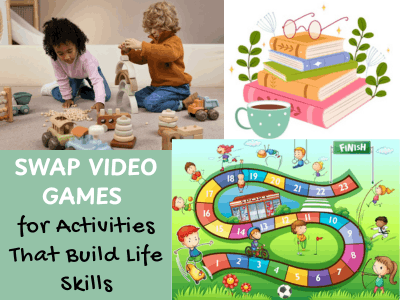

If you are trying to figure out how to reduce video game time without fights, you’ve likely realized that just ‘pulling the plug’ doesn’t work. The screaming and resistance aren’t just bad behavior, they are the result of a dopamine crash. To stop the battles, we have to change how we transition.
Video games are designed to be immersive, fast and rewarding. Real life is slower and requires effort. When the console turns off, the brain has to recalibrate. This uncomfortable phase is a transition, not a failure.
To successfully replace video games with meaningful screen-free activities, we have to rebuild the muscles screens replace: creativity, patience, and resilience.
Disclosure: Some of the links on this page are affiliate links. This means that if you click through and make a purchase, we may earn a small commission at no extra cost to you. We only recommend products, tools, and services that we believe provide real value for online safety, privacy, and identity protection.
As an Amazon Associate, we earn from qualifying purchases.
1. How to reduce video game time without fights or replace with meaningful activities
Children are wired for physical output. When their bodies move, their mood regulates, and resistance to “no screens” softens.
The “No-Destination” Bike Ride or Scooter Session
A simple ride around the neighborhood with no destination can do more than an hour of arguing. It’s about energy release, not athletic excellence.
Low-Prep Backyard Obstacle Courses
Use cones, ropes, chalk, and a stopwatch. It doesn’t need to be Pinterest-perfect; it just needs to provide a physical challenge that mimics the “leveling up” feeling of a game.
Outdoor Adventure & Responsibility
- Walking the Dog: Give them the leash and let them choose the route.
- Adventure Kits: Use magnifying glasses, a compass, or a national park pass to turn a walk into a “mission.”
The Cyber Safety Hook: Physically satisfied children are less emotionally dependent on digital stimulation. Movement reduces the craving for constant online engagement.
2. Hands-On Creation: Moving from Consumption to Capability
Video games are consumption; childhood should be about creation. When kids build, cook, or grow something, they move from being passive users to capable creators.
Some of the meaningful screen-free activities are :-
Building & Engineering (Analog Gaming)
- Model Building: LEGO sets or mechanical wood kits teach patience that no app can replicate.
- STEM Kits: Real engineering kits introduce complex thinking without the addictive gaming loop.
Craft and DIY activities like crocheting, beginner knitting kits, painting, or even diamond art can keep hands busy and minds calm. These slow, repetitive skills build focus in a way fast-paced gaming never can.
Culinary Ownership: The “One Meal a Week” Rule
Don’t just have them “help.” Let them own one meal. They plan the menu, write the list, and cook (with supervision). Serving a meal they made builds more confidence than any digital achievement.
Gardening & Patience
A small patch of soil or even a few pots teaches consistency. Seeing something grow because of their effort internalizes a sense of timing that the “instant” digital world simply doesn’t offer.
Recently, we started stargazing and it quickly became one of our favorite screen-free rituals. All we needed were some mats, pillows, blankets, and a clear sky (telescope is optional but good to have). It felt simple but it opened up conversations about satellites, planets, galaxies and maybe I even planted the seed of a future astronomer or astronaut. Who knows?
But what struck with me the most wasn’t just the learning- it was the memory.
The vast quiet sky with twinkling stars, lots of questions and the shared wonder.
Time spent like this creates beautiful memories that last forever shaping their childhood positively.
These activities work because they offer progression, challenge, and ownership, the same psychological rewards video games provide but without the addictive loop. And over time, they build something deeper: a childhood rooted in real experiences, not just digital ones.
3. Build Responsibility So Screens Aren’t the Only Source of Achievement
Children feel truly valued when they are trusted with real tasks not just entertained. When they experience responsibility, they gain confidence, learn problem-solving, and feel significant in the real world. The best part? These tasks don’t just help kids; they often make life easier for parents too.
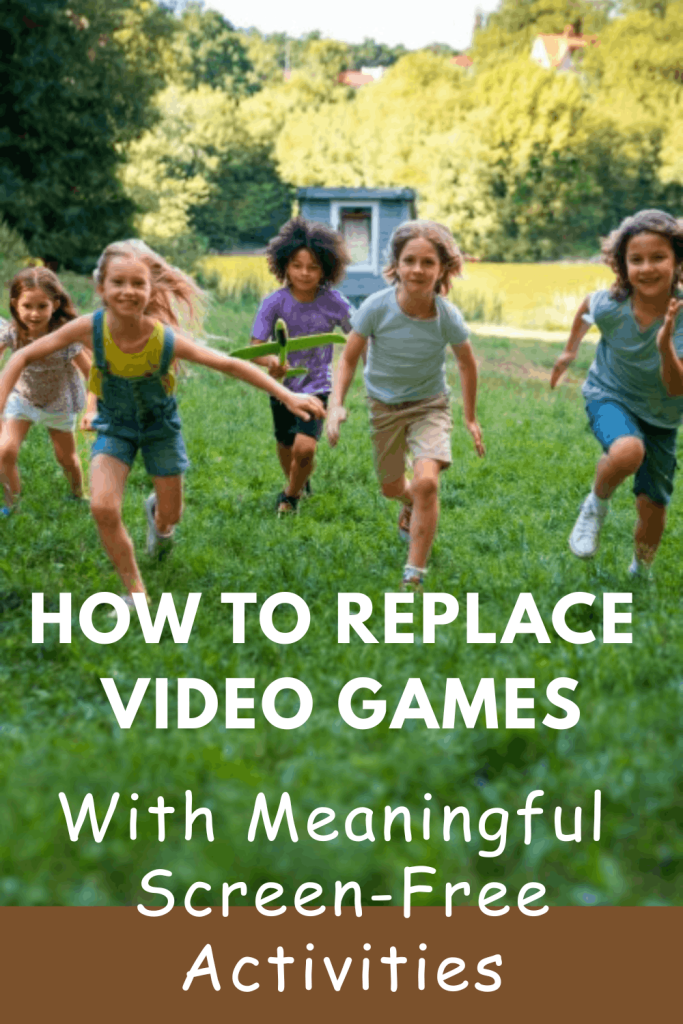
Here are some practical ways to give children meaningful responsibility:
Managing a Budget: Let your child manage a small weekly budget for household snacks. They’ll learn planning, trade-offs, and accountability all while feeling trusted to make decisions. It’s a simple way to teach real-life skills while giving them ownership.
Home Projects: Tasks like vacuuming the car or house, or folding clothes (my kids insist on listening to music while folding!) are perfect for children. They see a visible result of their effort, which gives them real satisfaction not just a digital score. And yes, it helps mum save time too!
Organizing Shared Spaces: Ask your child to organize a shared space like a playroom, rumpus room, or home theater area. My son took it so seriously that he reorganized almost the entire house and we’re still missing the other TV remote! Experiences like this teach ownership, planning, and attention to detail. Plus, parents get a more organized home without micromanaging every step.
Leadership Roles: Giving children leadership responsibilities, such as planning a family outing or taking care of younger siblings (age-appropriate), builds decision-making skills, empathy, and confidence. They begin to see themselves as capable contributors rather than passive observers.
Having a Pet: Pets are amazing for teaching responsibility and providing joy. It gives children a sense of routine and care. Watching a living creature thrive because of their efforts builds pride, patience and emotional growth.
4. The Skill of Quiet Boredom: Letting Imagination Wake Up
What honestly surprises me… and worries me a little… is how afraid we’ve become of letting our kids feel bored. Somewhere along the way, boredom started to feel like a problem we need to fix immediately. A gap we need to fill. A silence we need to interrupt.
Boredom is not an emergency; it is a bridge. It is the space where imagination finally wakes up. If you sit with it long enough after the pacing and the complaining, the brain begins to self-direct. This is how we can help kids to deal with boredom without screens.
In a world where algorithms compete for your child’s attention, the ability to self-direct attention is a superpower. This isn’t anti-tech; it’s about making sure their inner world is stronger than the digital one.
Conclusion: Screens as Intentional, Not Default
We are not banning joy; we are restoring balance.
Screens are incredible tools, but they are not childhood itself. When screen time is intentional – scheduled and supervised – it fits into life instead of replacing it.
When children feel significant and capable in the real world, they are less likely to rely on digital validation or get sucked into addictive gaming loops. Responsibility builds judgment, focus, and confidence exactly the skills that make navigating online spaces safer and healthier.
It’s not just about reducing screen time. It’s about giving children real achievements and real joy, while also making family life smoother and more manageable.
If you’re interested in the deeper issue behind all of this – why “safe screen time” can still reshape childhood? read our deeper dive: Digital Safety Is Not the Same as Digital Normalization.
I know this is a lot to remember. If you want a simple list of the tools I mentioned here, you can find them on my [Family Safety Toolbox]page.




Needed this post!
I especially love the section about responsibilities, that has worked really well for me in the past. I cant wait to try the other ideas.
I love this! This is so aligned with me and what I want for my babies!
Helpful. Much needed today. Everyone wants screen time. Game night is a thing in my house. Board games that is. 🙂
Love this post! We (my family and I ) seem to spend way too much time on screens. We also have game night at our house and we tried to have a night where everyone would just read but some of the kids are just not into books. I want this so much for my life and for my family!